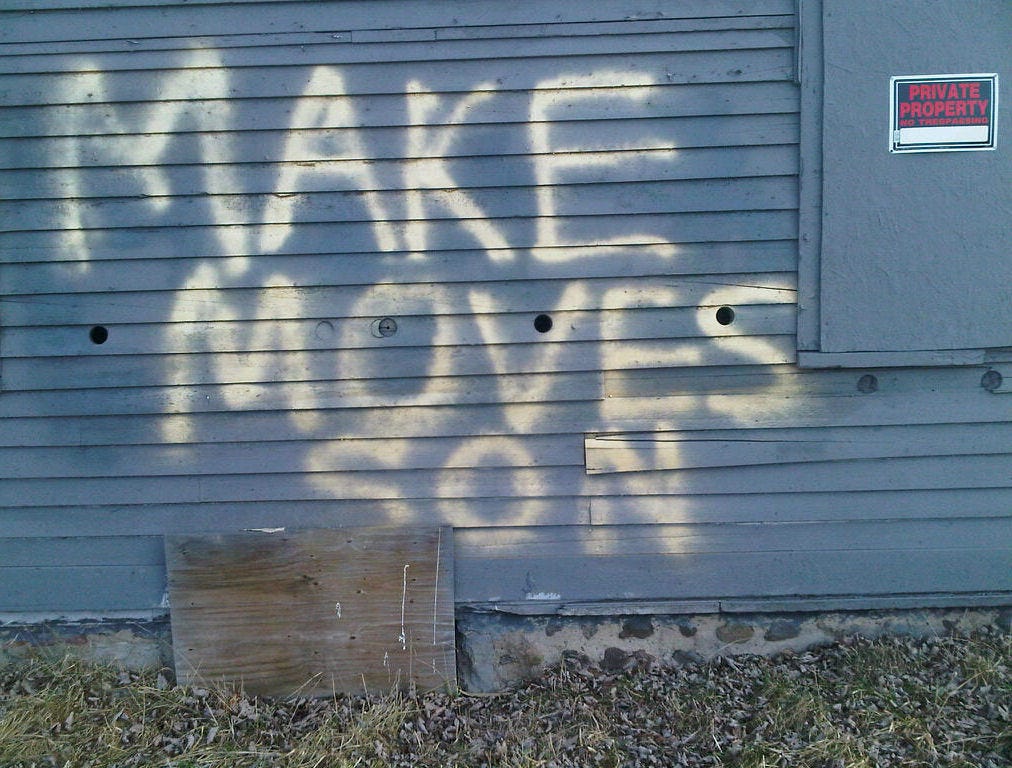
The Story:
Anyone who has ever attended a higher education institution has had to sit through an unremarkable orientation session consisting of boilerplate information, which supposedly prepared them for the next however many years of school they attend. However in the fall of 2007 at RIT, there would be a fateful presentation that would make a lasting mark on the cultural subconscious of RIT students. Thus began a butterfly effect of ironic social commentary which, until recently, would publicly infest and occupy the doorstep of its very campus.
It all started from a PSA video shown during the orientation presentation on the sensitive subject of sexual assault that had an overly contrived and ‘fellow kids’ tone to it. As described in this Reddit post , characters in the video say quotes along the lines of "Hey son, excited for school son?" "Hey son let's go to a party son" "Let's make moves son.” And it is generally remembered as a cringy and unintentionally satirical part of the orientation presentation. Ironically, this short video seems to be the only part of orientation that alumni from that class remember.
Later in the year the words “Make moves son” would be spray painted on a run down and abandoned house directly across the street from the campus block on John St. This act of vandalism started a cycle of paint overs and re-vandalizations, sometimes with the original slogan and sometimes with alternates such as “wash hands son” during the covid epidemic. This battle would persist for 17 years until it would ultimately be demolished in the fall of 2024.